Many R&D firms, appliance manufacturers, and spare parts suppliers face significant practical challenges when developing and sourcing control boards for household washing machines. The internal environment of a washing machine is characterized by high humidity, moisture, and frequent temperature fluctuations. Standard PCBA contract manufacturing—which often involves basic surface-mount technology (SMT) without targeted protective measures—frequently leads to issues after a period of use. Problems such as oxidized solder joints, capacitor aging, button malfunctions, program errors, and system shutdowns can occur, driving up after-sales repair costs and damaging brand reputation.
An even greater headache arises from the need to coordinate with multiple vendors—PCB fabricators, component suppliers, SMT assembly plants, and testing agencies. The repeated exchange of blueprints and Bills of Materials (BOMs) increases the risk of information errors; managing component shortages, price hikes, and the approval of substitute parts requires complex multi-party communication; and a delay at any single stage can stall the entire project. During the small-batch prototyping phase, many factories quote high prices or refuse orders, keeping R&D costs high. In mass production, inconsistent quality—where some control boards function normally while others exhibit power-up anomalies—creates major issues for final appliance assembly.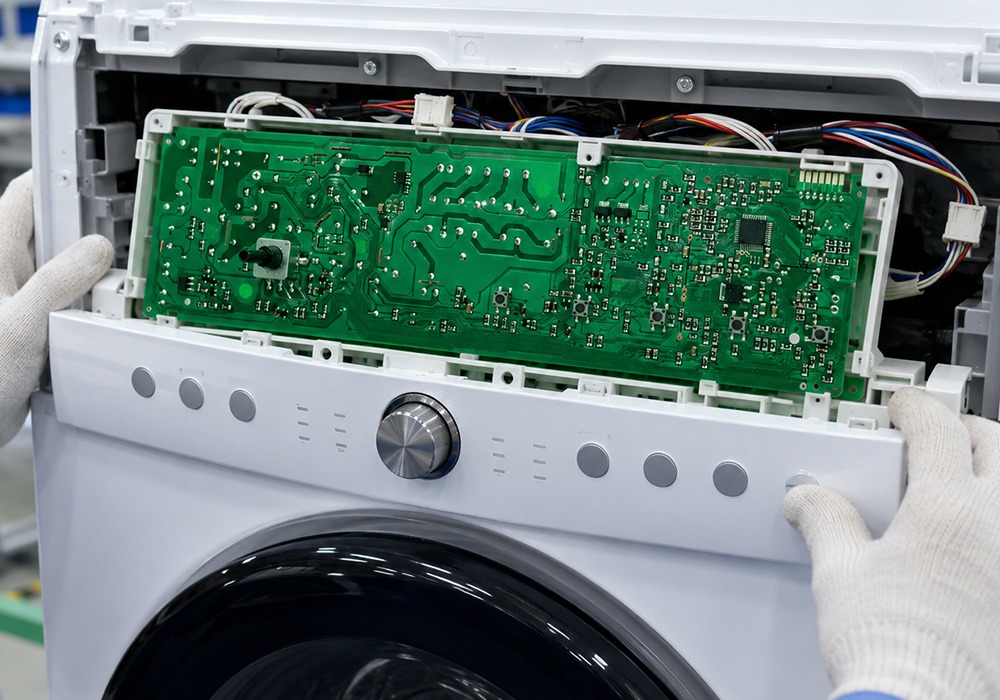
The control board serves as the “brain” of the washing machine, managing functions such as wash program selection, water level detection, motor driving, spin-cycle control, and fault alerts. Whether for front-load or top-load washing machines, or for commercial, rental, or coin-operated units, this control board is indispensable. Because the product must operate reliably over the long term in humid and high-vibration environments, there are stringent requirements for moisture-proofing, component selection, and functional testing. Whether for new product prototyping, small-batch pilot runs, mass production for assembly, or manufacturing replacement boards for after-sales service, a comprehensive and reliable PCBA delivery solution is essential.
Established in 2012, Shenzhen Gaofuheng Electronic Technology Co., Ltd. specializes in one-stop PCB assembly services. Our business covers the entire process—including PCB fabrication, component sourcing, chip programming, functional testing, packaging, and logistics—enabling us to handle the complete PCBA manufacturing process for household washing machine control boards. We conduct DFM (Design for Manufacturability) assessments in advance, offering process recommendations tailored to the high-humidity operating conditions of washing machines and optimizing circuit protection designs to mitigate failure risks caused by moisture corrosion.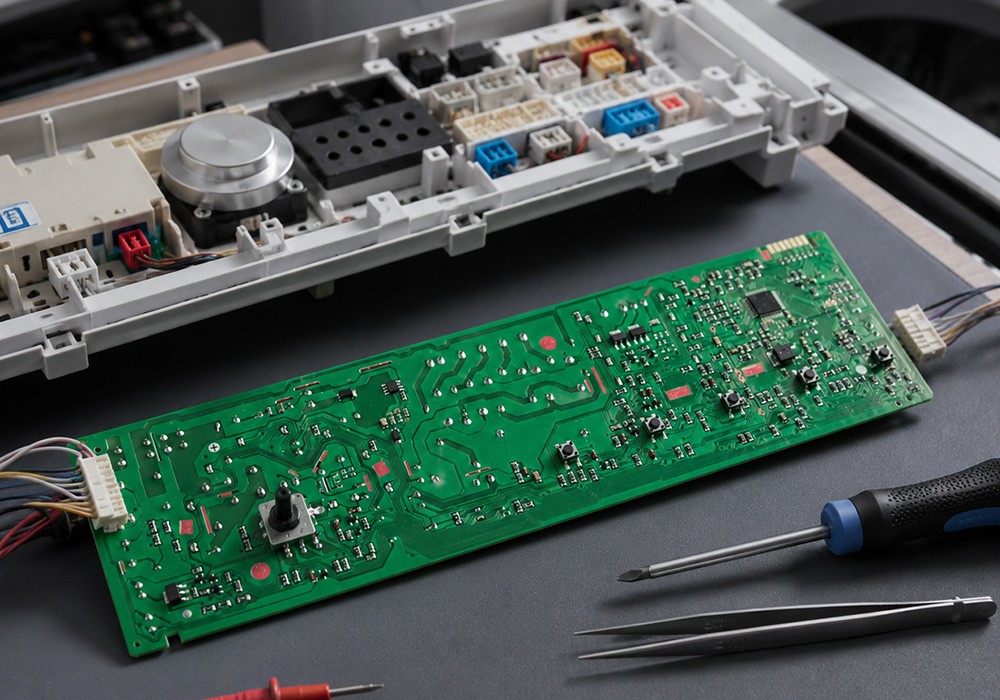
We provide a comprehensive, one-stop solution—covering everything from BOM component sourcing, PCB fabrication, SMT assembly, and chip programming to full functional testing of finished boards—allowing clients to work with a single partner and save time otherwise spent coordinating with multiple vendors. Before shipment, we perform rigorous functional testing on the control boards, simulating real-world operating environments to verify wash cycles and protection features; this proactive screening of defective units helps reduce post-market return rates. We support projects ranging from R&D prototypes and small-batch pilot runs to full-scale mass production, offering flexible order management.
Whether you are an R&D team developing a new washing machine model, or a manufacturer (OEM or component supplier) seeking a reliable source for washing machine control board PCBAs, our one-stop service helps streamline your supply chain, ensure consistent product quality, and shorten project timelines. To overcome challenges such as moisture-related failures in washing machine control boards or the complexities of managing multiple suppliers, partner with Shenzhen Gaofuheng Electronic Technology Co., Ltd.